Nuco Training

Category: Health and Safety

  • First Aid for Youth Mental Health qualification

    First Aid for Youth Mental Health qualification

    The qualification has been designed with children and young people in mind covering areas such as depression, self-harm, eating disorders and bullying and will provide the knowledge and skills to identify a potential mental condition, start a conversation and provide support and guidance to professional help.

    The qualification is suitable for anyone who actively connects with children and young people such as parents, carers, teachers, youth group leaders and young adults.

    At present the qualification has only been approved by Ofqual but is currently going through the SQA Accreditation approval process.  We hope this will be completed in the next few weeks and will update you when this has been completed. The Ofqual regulated qualification can be delivered in all parts of the UK in the meantime, including Scotland.

    TRAINER/ASSESSOR REQUIREMENTS

    To meet regulatory body requirements, it is crucial that all Trainer/Assessors have sufficient subject knowledge competence to deliver a qualification.

    The new Award in First Aid for Youth Mental Health shares many similarities with the ‘adult’ version of the qualification, but there are some crucial differences that we must ensure are known by Trainer/Assessors before they are able to deliver the qualification.

    Current First Aid for Mental Health Trainers who want to deliver the Youth version must either:

    On receipt of either of the above, we will be able to register you to teach the new First Aid for Youth Mental Health course after completing our Registration FormThe cost for this is £50 + vat.

    QUALIFICATION INFORMATION

    Please see the links below to view the qualification information:

    COURSE PAPERWORK

    The course paperwork, together with all Guidance Documents are available in the download area of NucoPlus and it is important that Trainer/Assessors use all the FAA guidance for every course.

    ASSESSMENT

    CLASSROOM TRAINING

    The Assessment for the Classroom-based course is by a Written Assessment Paper and the practical demonstration of the application of the First Aid Action Plan for Mental Health.

    DISTANCE LEARNING

    The Distance Learning qualification is assessed through Video Conferencing software by Professional Discussion with the Trainer/Assessor and Practical Demonstration of the application of the First Aid Action Plan for Mental Health.

    Trainer/Assessors must conduct and mark the assessment adhering to the guidance to ensure that all Learners are assessed accurately, consistently and fairly.

    INSTRUCTOR TRAINING COURSE

    From 1st April 2021 our Level 3 First Aid for Mental Health Instructor Training course will include training for the Youth qualification, so after attending, a Trainer/Assessor will automatically be able to run the Youth version as well.

    If you have any questions or need any additional information, please just get in touch.

    TRAINING MANUALS

    Youth Mental Health

    We have developed a bespoke book to accompany the course which is available to purchase from our online shop at www.nucoplus.com
  • Health and Safety – Distance Learning

    Health and Safety – Distance Learning

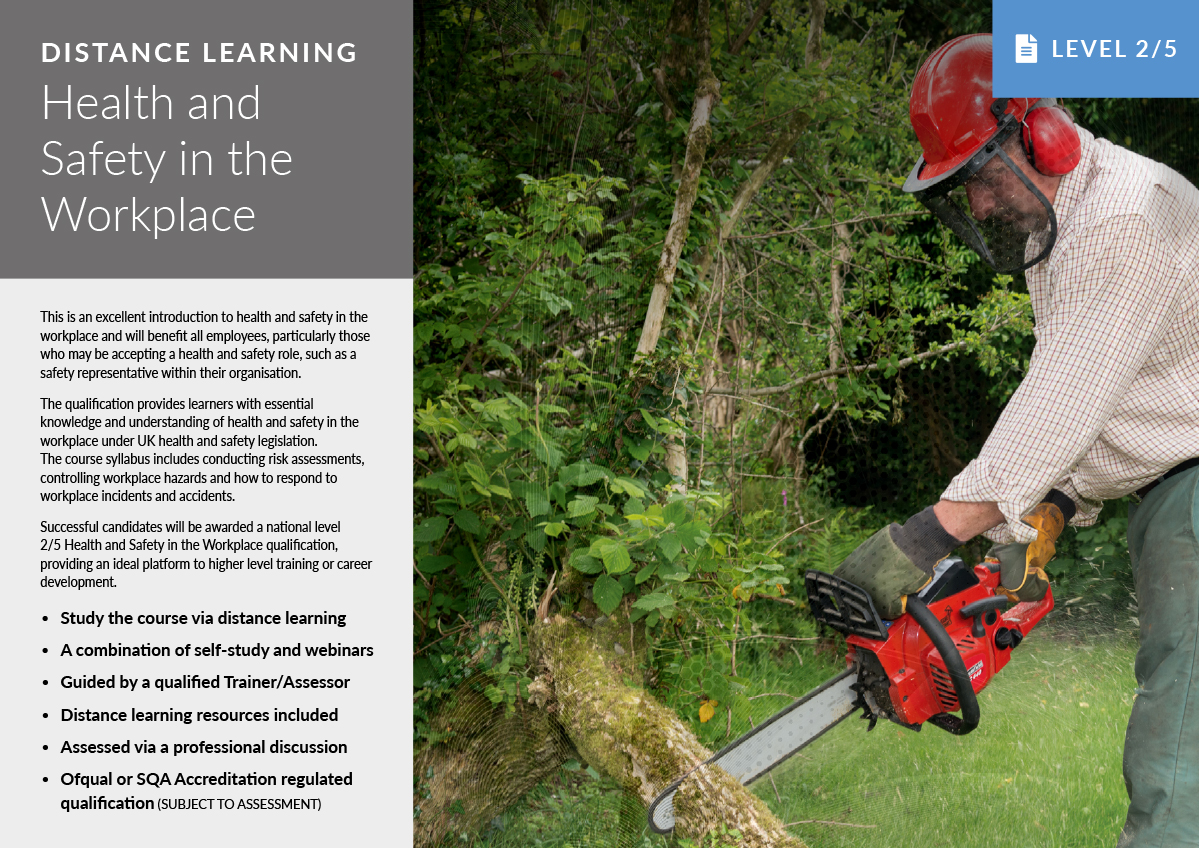
    Following on from our recent Distance Learning Newsletters, we are pleased to announce that the following qualification is also now available for registered Health and Safety trainers to deliver through distance learning:

    FAA Award in Health and Safety in the Workplace (Ofqual level 2, SQA Acc level 5)

    This is an excellent introduction to health and safety in the workplace and will benefit all employees, particularly those who may be accepting a health and safety role, such as a safety representative within their organisation. The qualification provides learners with essential knowledge and understanding of health and safety in the workplace under UK health and safety legislation. The course syllabus includes conducting risk assessments, controlling workplace hazards and how to respond to workplace incidents and accidents.

    Successful candidates will be awarded a national level 2/5 Health and Safety in the Workplace qualification, providing an ideal platform to higher level training or career development.

    You will need to be registered with Nuco Training to access the course paperwork and additional documents for this qualification which can be downloaded from your NucoPlus account (once registered) and include the following documents:

    • Distance learning Registration Form
    • Distance learning Qualification Specification
    • Distance learning Learner Resource Sheet
    • Distance learning Assessment Guidance
    • Distance learning Assessment Record
    • Distance learning Evaluation Form
    • Zoom User Guide
    • Marketing Flyer

    To learn more about this new delivery method read more here: https://dev2025.nucotraining.com/distance-learning-first-aid-for-mental-health/

    It is very important that the Trainer/Assessor Distance Learning Guidance is read and understood by Trainer/Assessors to ensure that all requirements are followed.

    If you are not currently registered to teach the Health and Safety course through Nuco, but have the necessary qualifications and would like to register, please contact andrew@nucotraining.com

    You can find the course books for all Distance Learning courses on the NucoPlus online shop here

    If you have any questions or need any additional information then please do not hesitate to contact darren@nucotraining.com

  • Manual Handling – Distance Learning

    Manual Handling – Distance Learning

    Following on from our recent Distance Learning Newsletters, we are pleased to announce that the following qualification is also now available for registered Manual Handling trainers to deliver through distance learning:

    FAA Award in Manual Handling – Principles and Practice (Ofqual level 2, SQA Acc level 5)

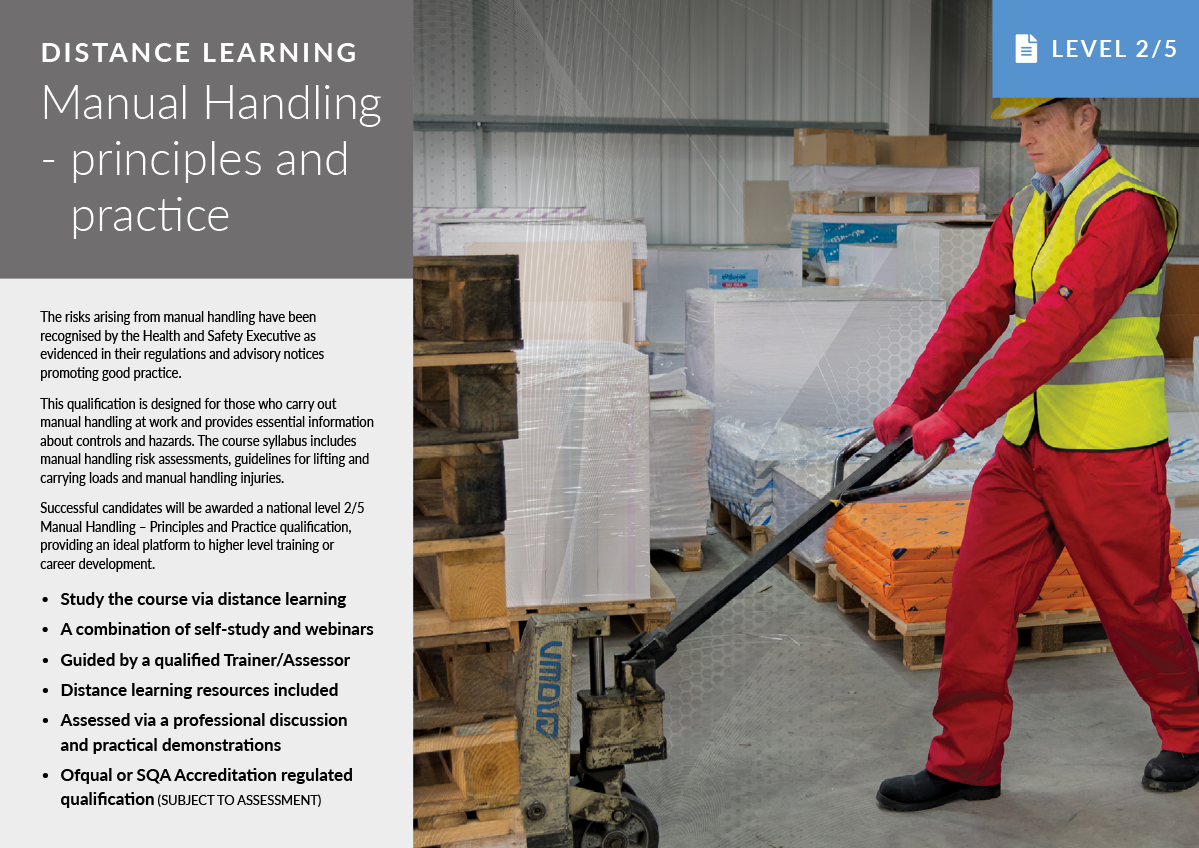
    The risks arising from manual handling have been recognised by the Health and Safety Executive as evidenced in their regulations and advisory notices promoting good practice. This qualification is designed for those who carry out manual handling at work and provides essential information about controls and hazards. The course syllabus includes manual handling risk assessments, guidelines for lifting and carrying loads and manual handling injuries.

    Successful candidates will be awarded a national level 2/5 Manual Handling – Principles and Practice qualification, providing an ideal platform to higher level training or career development.

    You will need to be registered with Nuco Training to access the course paperwork and additional documents for this qualification which can be downloaded from your NucoPlus account (once registered) and include the following documents:

    • Distance learning Registration Form
    • Distance learning Qualification Specification
    • Distance learning Learner Resource Sheet
    • Distance learning Assessment Guidance
    • Distance learning Assessment Record
    • Distance learning Evaluation Form
    • Zoom User Guide
    • Marketing Flyer

    To learn more about this new delivery method read more here: https://dev2025.nucotraining.com/distance-learning-first-aid-for-mental-health/

    It is very important that the Trainer/Assessor Distance Learning Guidance is read and understood by Trainer/Assessors to ensure that all requirements are followed.

    If you are not currently registered to teach the Manual Handling course through Nuco, but have the necessary qualifications and would like to register, please contact andrew@nucotraining.com

    You can find the course books for all Distance Learning courses on the NucoPlus online shop here

    If you have any questions or need any additional information then please do not hesitate to contact darren@nucotraining.com

  • Health and safety statistics 2018

    Health and safety statistics 2018

    The HSE published online today (31st October 2018) the latest statistics on work-related health and safety in Great Britain, including the following key annual figures (2017/18):

    • 1.4 million working people suffering from work-related ill health
    • 2,595 mesothelioma deaths due to past asbestos exposures (2016)
    • 144 workers killed at work
    • 555,000 injuries occurred at work according to the Labour Force Survey
    • 71,062 injuries to employees reported under RIDDOR
    • 30.7 million working days lost due to work-related ill health and workplace injury
    • £15 billion estimated cost of injuries and ill health from current working conditions (2016/17)

    The release provides detailed commentary on these figures and is supported by:

    • The Statistics webpages , with a range of information e.g. on different types of work-related ill-health and different industry sectors.
    • A comprehensive set of tables , designed to make the data accessible to users.
    • The HSE’s annual infographic-style summary booklet .
  • The Construction (Design and Management) Regulations 2015

    The Construction (Design and Management) Regulations 2015

    Health & Safety news from the HSE …

    The Construction (Design and Management) Regulations 2015 (CDM 2015) came into force in Great Britain on 6 April 2015. They set out what people involved in construction work need to do to protect themselves from harm and anyone the work affects.

    Whatever your role in construction, CDM aims to improve health and safety in the industry by helping you to:

    • Sensibly plan the work so the risks involved are managed from start to finish

    • Have the right people for the right job at the right time

    • Cooperate and coordinate your work with others

    • Have the right information about the risks and how they are being managed

    • Communicate this information effectively to those who need to know

    • Consult and engage with workers about the risks and how they are being managed

    CDM 2015 is subject to certain transitional arrangements, for construction projects that began before 6 April 2015 and continue beyond that date.

    HSE has published Legal Series guidance that supports CDM 2015 and explains it in more detail. HSE will seek views later in 2015 on whether to replace this guidance with an Approved Code of Practice, which many in the industry indicated they would prefer in the 2014 public consultation.

    Information on the legal requirements and a timeline of how the changes came about is also available.

  • Lifesaving action at Alston Traincare

    Lifesaving action at Alston Traincare

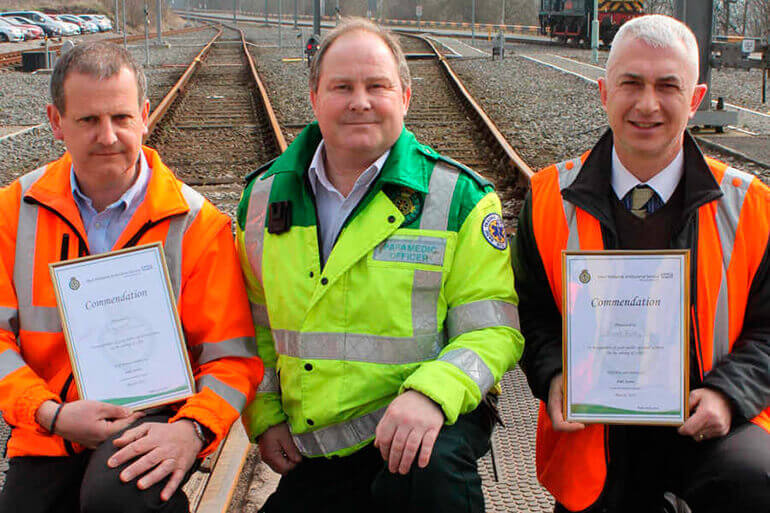
    Lifesavers – Andy Wall and Russell Rowley receive awards from Andy Jeynes

    A trio of workers from a train maintenance firm have been praised for saving the life of a colleague.

    Andy Wall, Barry Parkes and Russell Rowley, who all work at Alston, off Jones Road in Wolverhampton, came to to the rescue of an unnamed contractor who suffered a cardiac arrest.

    Mr Wall, a senior production manager, said: “We were sitting in the office when one of our staff members ran in to tell us that a colleague had collapsed.

    I went round and saw him on the floor gasping for breath. Russell and Barry quickly joined me and as they assessed him, I went to call 999.”

    Mr Parkes, 49, is one of the members of the train maintenance teams and has worked for Alstom for 14 years.

    Like many other staff, he is a trained First Aider.

    Mr Rowley, 42 and a health and safety manager, had only worked at the firm’s Traincare centre for a week.

    He said: “Being my first week at the company I didn’t really know many people and didn’t know Barry, Andy or the gentleman who had collapsed very well.

    But nevertheless, whilst Barry stayed with him, I ran to get the defibrillator from the office.

    When I came back, he had stopped breathing.

    As he’d collapsed in an awkward position by a table and some chairs, Barry and I had to quickly pull him clear so that I could start CPR. Whilst I did CPR Barry opened up the defibrillator to get it ready. No sooner had we started CPR than we were joined by a paramedic who told us to keep doing resuscitation whilst he got his medical equipment out.”

    The paramedic shocked the man’s heart on scene and, thanks to the efforts of the trio, the man started to breathe for himself.

    He was taken to New Cross Hospital for emergency treatment and has since made a full recovery.

    Andy Jeynes, a community response manager from West Midlands Ambulance Service, recently visited Alstom to present commendations to recognise the staff members fantastic achievement.

    “The actions of Andy, Russell and Barry are extremely commendable as saving a life is the best gift you can give,” he said.

    This case just shows how important early CPR is when someone is in cardiac arrest. If it hadn’t been for their decisive actions, the outcome would’ve almost certainly been less positive.

    The quicker you start CPR and shock a patient in cardiac arrest with a defibrillator, the better the chances they have of surviving.”

    Editorial and photograph courtesy of West Midlands Express & Star

  • Safe Working in Confined Spaces

    Safe Working in Confined Spaces

    Confined Spaces Regulations 1997. Approved Code of Practice, Regulations and guidance.

    This Approved Code of Practice (ACOP) and guidance is for those involved in work within confined spaces, those who employ or train such people and those that represent them.

    It explains the definition of a confined space in the Regulations and gives examples. It will help you assess the risk of working within a particular confined space and put precautions in place for work to be carried out safely.

    This edition brings the document up to date with regulatory and other changes. The guidance has been simplified to make the understanding and use of the document easier, particularly with clarifying the definition of a confined space.

    Download the HSE document to read more: Safe work in confined spaces

    Other changes include:

    • a flowchart to help in the decision-making process
    • additional examples including new workplace risks such as specifically created hypoxic environments, fire suppression systems etc
    • amendments relating to the need to check, examine and test equipment