Nuco Training

Category: News

  • 2015 Resuscitation guidelines

    2015 Resuscitation guidelines

    The 15th October 2015 was a date of great significance for our industry, as it saw the latest protocol changes from The Resuscitation Council (UK).

    Nuco Training are working on updating all of the resources to meet these protocol changes. As soon as they are available, we will be notifying instructors with a link to download the latest updates to your teaching resources.

    Download the summary here – Please click here to see the changes in full.

    The industry has until the end of December 2016 to implement all of the changes, but as industry leaders at Nuco Training, we are expecting to have all resources updated by the end of November 2015, making them available for our instructors to download and implement into training as soon as possible.

    Although the changes at first glance seem minimal, there are a lot of subtle updates to the guidance. Because of this, we are taking our time in ensuring that the changes are reflected accurately in all of our materials.

    Article courtesy of The Resuscitation Council (UK)

  • Automated External Defibrillators on Aircraft

    Automated External Defibrillators on Aircraft

    Resuscitation Council statement …

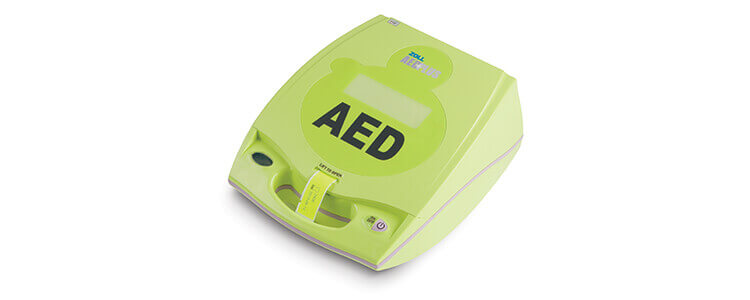
    Airlines are required to train cabin crew in first aid and to carry first-aid kits. Since 2004, the Federal Aviation Authority has required all US commercial airlines to carry AEDs on passenger flights that are large enough to have at least one flight attendant and to train cabin crew in their use.

    The first airline to carry defibrillators was British Caledonian in 1986. Some UK-based current airlines carry AEDs, including Virgin, British Airways and EasyJet. At present there is no requirement for all airlines to carry defibrillators.

    The exact number of cardiac arrests and sudden cardiac deaths that occur each year during flights on commercial passenger aircraft is unknown, due to the absence of mandatory reporting. It has been estimated that 1,000 people die during commercial flights each year. In-flight medical emergencies during air travel have become more frequent, due to larger numbers of passengers and more frequent travel by older people and people with chronic illness. Medical emergencies have been reported to occur with a frequency of 1 per 10 – 40,000 passengers.

    When cardiac arrest occurs, any delay in starting resuscitation and in using a defibrillator to deliver a shock when needed will reduce the person’s chance of survival. Although in-flight cardiac arrest is relatively rare, survival from cardiac arrest when there is no defibrillator on board is extremely unlikely, due to the time that it takes to divert and land the aircraft to obtain the treatment needed.

    There have been several reports (series and individual case reports) of successful resuscitation of passengers during air travel as a result of prompt recognition of cardiac arrest by trained flight attendants, prompt delivery of cardiopulmonary resuscitation (CPR) and prompt use of an on-board automated external defibrillator (AED). Success rates of up to 55% have been reported in people who received prompt CPR and AED use for cardiac arrest due to a ‘shockable rhythm’ (a chaotic heart rhythm that is treatable with a defibrillator).  An AED will only save a life when the cardiac arrest is due to a shockable rhythm. These rhythms have been present in up to one third of cardiac arrests reported in aircraft passengers. Survival from an in-flight cardiac arrest that is not due to a shockable rhythm is extremely unlikely.

    Even if the cardiac arrest rhythm is not shockable, attaching an AED to a person in cardiac arrest may help to guide the further action of those attempting resuscitation.

    Unfortunately, some cardiac arrests occur when passengers are unobserved, for example when asleep or in the toilet. In such circumstances the delay in recognising the event, starting resuscitation and attaching an AED inevitably reduces the likelihood of a successful outcome.

    We recognise the importance of public-access defibrillators in improving survival from sudden cardiac arrest. These AEDs are often located in places visited by large numbers of people, one of whom may suffer cardiac arrest (e.g. railway stations, airports, shopping centres, sports venues), or in places where delay in the arrival of an ambulance could greatly limit a person’s chance of survival unless a shock is given before the ambulance arrives (e.g. rural villages, golf courses). A commercial aircraft with a substantial number of passengers on board is analogous to the rural-village example. We strongly advocate voluntary action in the public interest by all airlines to equip commercial passenger flights with an AED and train their cabin crews in recognition of cardiac arrest and delivery of immediate attempted resuscitation.

    Article courtesy of The Resuscitation Council (UK)

  • The Construction (Design and Management) Regulations 2015

    The Construction (Design and Management) Regulations 2015

    Health & Safety news from the HSE …

    The Construction (Design and Management) Regulations 2015 (CDM 2015) came into force in Great Britain on 6 April 2015. They set out what people involved in construction work need to do to protect themselves from harm and anyone the work affects.

    Whatever your role in construction, CDM aims to improve health and safety in the industry by helping you to:

    • Sensibly plan the work so the risks involved are managed from start to finish

    • Have the right people for the right job at the right time

    • Cooperate and coordinate your work with others

    • Have the right information about the risks and how they are being managed

    • Communicate this information effectively to those who need to know

    • Consult and engage with workers about the risks and how they are being managed

    CDM 2015 is subject to certain transitional arrangements, for construction projects that began before 6 April 2015 and continue beyond that date.

    HSE has published Legal Series guidance that supports CDM 2015 and explains it in more detail. HSE will seek views later in 2015 on whether to replace this guidance with an Approved Code of Practice, which many in the industry indicated they would prefer in the 2014 public consultation.

    Information on the legal requirements and a timeline of how the changes came about is also available.

  • Instructor Annual Monitoring in First Aid

    Instructor Annual Monitoring in First Aid

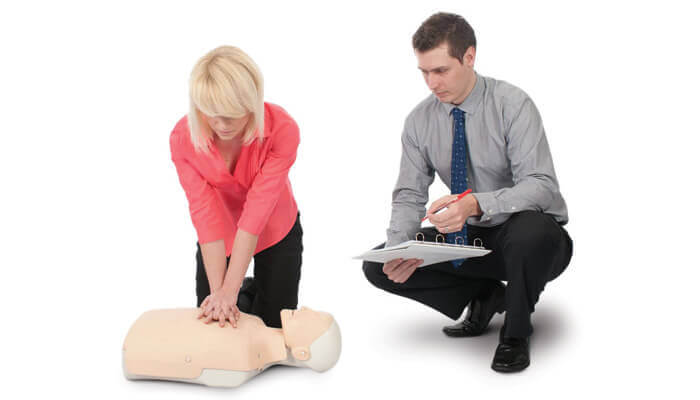
    You should be aware that the Regulatory Bodies require that every First Aid Instructor is monitored annually to comply with their regulations. Monitoring should be done on an annual basis so it is important to ensure that, by the end of the year, all your Instructors will have been monitored during 2015.

    If an Instructor has attended an Instructor Update which included being monitored on their teaching that is sufficient.

    The Monitor should be independent in that he/she is not directly involved with the course being monitored. From 1st October 2015 Monitors must possess a formal IQA qualification or have attended CPD training in IQA.

    The monitoring exercise must be undertaken in an honest and professional manner and should cover at least half a day to include the final assessment process.

    On completion, the Monitor should discuss their observations with the Instructor in private and both should then sign the report. A copy of the Monitoring Report should be sent to Nuco Training to be added to their instructor profile.

    If you are a Nuco Instructor click here to download a Monitor Report form.

  • Lifesaving action at Alston Traincare

    Lifesaving action at Alston Traincare

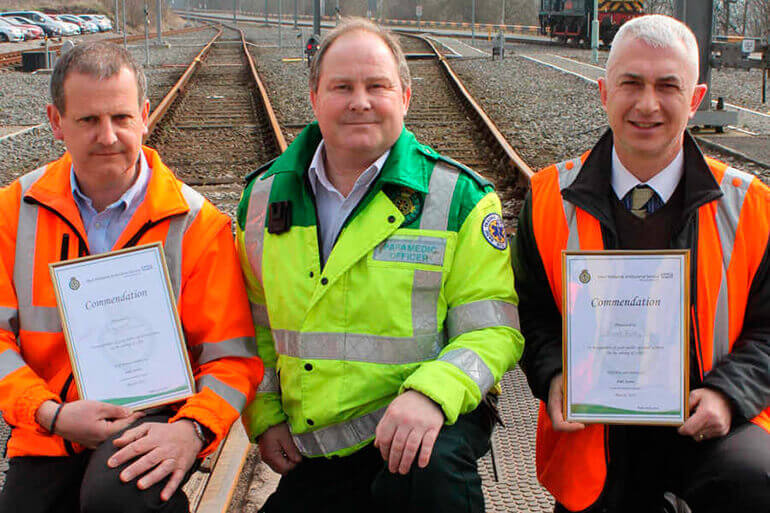
    Lifesavers – Andy Wall and Russell Rowley receive awards from Andy Jeynes

    A trio of workers from a train maintenance firm have been praised for saving the life of a colleague.

    Andy Wall, Barry Parkes and Russell Rowley, who all work at Alston, off Jones Road in Wolverhampton, came to to the rescue of an unnamed contractor who suffered a cardiac arrest.

    Mr Wall, a senior production manager, said: “We were sitting in the office when one of our staff members ran in to tell us that a colleague had collapsed.

    I went round and saw him on the floor gasping for breath. Russell and Barry quickly joined me and as they assessed him, I went to call 999.”

    Mr Parkes, 49, is one of the members of the train maintenance teams and has worked for Alstom for 14 years.

    Like many other staff, he is a trained First Aider.

    Mr Rowley, 42 and a health and safety manager, had only worked at the firm’s Traincare centre for a week.

    He said: “Being my first week at the company I didn’t really know many people and didn’t know Barry, Andy or the gentleman who had collapsed very well.

    But nevertheless, whilst Barry stayed with him, I ran to get the defibrillator from the office.

    When I came back, he had stopped breathing.

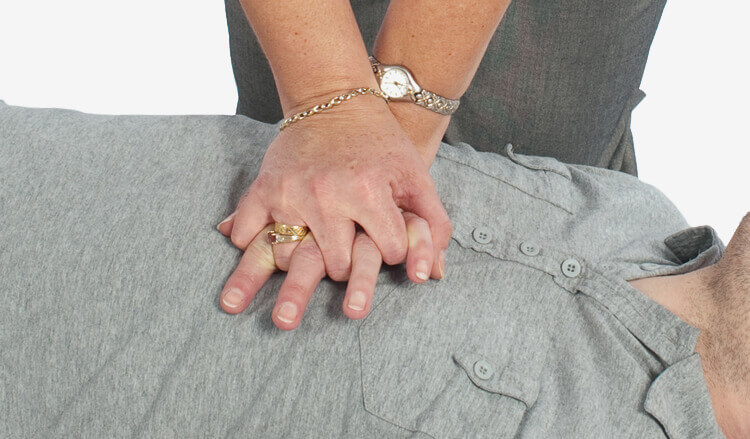
    As he’d collapsed in an awkward position by a table and some chairs, Barry and I had to quickly pull him clear so that I could start CPR. Whilst I did CPR Barry opened up the defibrillator to get it ready. No sooner had we started CPR than we were joined by a paramedic who told us to keep doing resuscitation whilst he got his medical equipment out.”

    The paramedic shocked the man’s heart on scene and, thanks to the efforts of the trio, the man started to breathe for himself.

    He was taken to New Cross Hospital for emergency treatment and has since made a full recovery.

    Andy Jeynes, a community response manager from West Midlands Ambulance Service, recently visited Alstom to present commendations to recognise the staff members fantastic achievement.

    “The actions of Andy, Russell and Barry are extremely commendable as saving a life is the best gift you can give,” he said.

    This case just shows how important early CPR is when someone is in cardiac arrest. If it hadn’t been for their decisive actions, the outcome would’ve almost certainly been less positive.

    The quicker you start CPR and shock a patient in cardiac arrest with a defibrillator, the better the chances they have of surviving.”

    Editorial and photograph courtesy of West Midlands Express & Star
  • UK Government Announce Compulsory First Aid for Nursery Recruits

    UK Government Announce Compulsory First Aid for Nursery Recruits

    New nursery and pre-school staff will be required to undertake paediatric first aid for the first time, thanks to new government proposals.

    The plans have received the support of parents Joanne and Dan Thompson, who have been campaigning for the change following the tragic death of their daughter, Millie, at nursery in October 2012. Their important campaign culminated in an e-petition signed by over 103,000 people.

    The new proposals will mean newly qualified staff with a childcare level 2 and 3 qualification must have an emergency paediatric first aid or full paediatric first aid certificate – a life-saving change that will add approximately 15,000 additional trained early years professionals to our nurseries and pre-schools each and every year.

    Mr and Mrs Thompson have also given their backing to the creation of a new special certificate – to be known as ‘Millie’s Mark’ – to be displayed by nurseries who have achieved gold-standard provision. The certificate will help to give parents assurance that their child is being cared for by safe and knowledgeable staff. It is hoped that over time the 2 initiatives announced today will help ensure that as many staff members as possible are trained in these important, life-saving skills.

    Childcare and Education Minister, Sam Gyimah said:

    As a parent myself, I know that every single mum and dad wants the confidence that those tasked with caring for their child have the right training should the absolute worst happen.

    Today’s proposals will mean that thousands more staff will be able to respond to emergencies more quickly, making sure parents really can access the very best possible childcare choices for their families.

    Not only will this help ensure children are safe while they learn, grow and develop, but it will also raise the quality and skills of the early years workforce to help them deal with day-to-day first aid issues, such as allergies and knowing when to call parents.”

    Joanne and Dan Thompson said:

    We are both extremely pleased that the government have listened to our awareness campaign, and changes are being made that could ultimately save a child’s life.

    We are proud that these changes are being made in memory of our precious daughter and that her legacy continues to grow – but we are heartbroken that these changes are only coming into place because we lost her.

    The estimate of 15,000 new childcare workers entering the workplace with this specific qualification is fantastic news for parents and we fully support ‘Millie’s Mark’, and are looking forward to working with the specific government departments to help turn this into a reality.”

    The government has also announced today (12 March 2015) that it is extending a special deal enabling schools to buy life-saving defibrillator machines at reduced prices to all early years settings, including holiday and out-of-school providers.

    Defibrillators are easy-to-use machines that could mean the difference between life and death for a child suffering from cardiac arrest. The machines work by delivering a controlled electric shock to the heart through sticky pads placed on the chest. The shocks interrupt the irregular heart rhythm that characterises a cardiac arrest, causing it to return to normal.

    Original source: www.gov.uk

  • Safe Working in Confined Spaces

    Safe Working in Confined Spaces

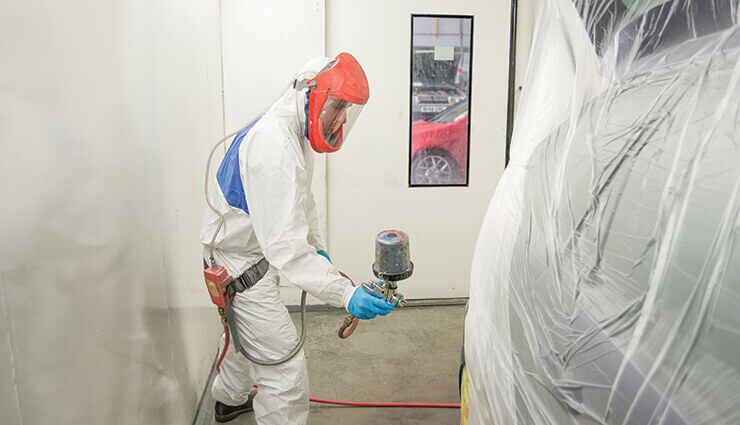
    Confined Spaces Regulations 1997. Approved Code of Practice, Regulations and guidance.

    This Approved Code of Practice (ACOP) and guidance is for those involved in work within confined spaces, those who employ or train such people and those that represent them.

    It explains the definition of a confined space in the Regulations and gives examples. It will help you assess the risk of working within a particular confined space and put precautions in place for work to be carried out safely.

    This edition brings the document up to date with regulatory and other changes. The guidance has been simplified to make the understanding and use of the document easier, particularly with clarifying the definition of a confined space.

    Download the HSE document to read more: Safe work in confined spaces

    Other changes include:

    • a flowchart to help in the decision-making process
    • additional examples including new workplace risks such as specifically created hypoxic environments, fire suppression systems etc
    • amendments relating to the need to check, examine and test equipment
  • New Allergen Rules for the Food Industry

    New Allergen Rules for the Food Industry

    New Allergen rules have come out this month regarding Food Allergen Labelling for the Food Industry which may be of interest to trainers delivering Food Safety and/or Good Nutrition.

    Detailed information about the rules can be found at: http://www.food.gov.uk/news-updates/campaigns/allergen-rules

    In brief:

    If you are a consumer

    The new allergen information rules will mean that:

    • You can now ask for information about 14 allergens, if used as an ingredient in the food you are buying, when you eat out.
    • You will see allergenic ingredients emphasised (for example, using bold, italics or colours) on prepacked foods. This means all allergen information will be found on the ingredients list only.

    If you are a food business selling loose food or in food service (for example school canteens, cafes, restaurants, takeaways, caterers)

    The new allergen information rules will mean that:

    • You must provide information about 14 allergens, if used as an ingredient in the food you are providing or selling. You can do this on a menu, chalkboard, website or orally, but must signpost your customers to this information.

    If you are a food business manufacturing prepacked food

    The new allergen information rules will mean that:

    • You will have to emphasise allergenic ingredients (for example, by using bold, italics or colours) on the ingredients list. This means all allergen information will be provided on the ingredients list only.
  • October 2015 Ofqual and SQA regulations

    October 2015 Ofqual and SQA regulations

    You may be aware, there are changes in regulations coming into force on 1st October 2015.

    To clarify the situation, in order to continue teaching ofqual and SQA regulated First Aid qualifications, an Instructor must have:

    A teaching qualification at Level 3 or above and
    An Assessing qualification or have attended First Aid Assessor/IQA CPD Training with an Awarding Organisation

    Please note that some teaching qualifications have an assessors element that is suitable, as part of its syllabus. Please see below for the list of acceptable qualifications. All Instructors will need to hold qualifications that tick both the ‘Train’ and ‘Assess’ columns on this document. As you can see, some qualifications tick both boxes. If you only hold a ‘Train’ qualification, then you will need to gain an assessing qualification or attend First Aid Assessor/IQA CPD Training with an Awarding Organisation by October 2015. Please also note that the Level 3 PTLLS qualification holds 6 credits and does not meet the assessors criteria; only the Level 4 PTLLS meets the criteria for assessing.

    In order to monitor fellow Instructors, you must have:

    An Internal Quality Assurance qualification or have attended Internal Quality Assurance CPD Training with an Awarding Organisation

    In order to undertake Internal Verification, you must have:

    An Internal Quality Assurance qualification or have attended Internal Quality Assurance CPD Training with an Awarding Organisation

    Please see the list of acceptable qualifications in the following document: SfH-Assessment-Principles-for-First-Aid-Qualifications-V4

  • CPR and AED training is fast becoming a necessity

    CPR and AED training is fast becoming a necessity

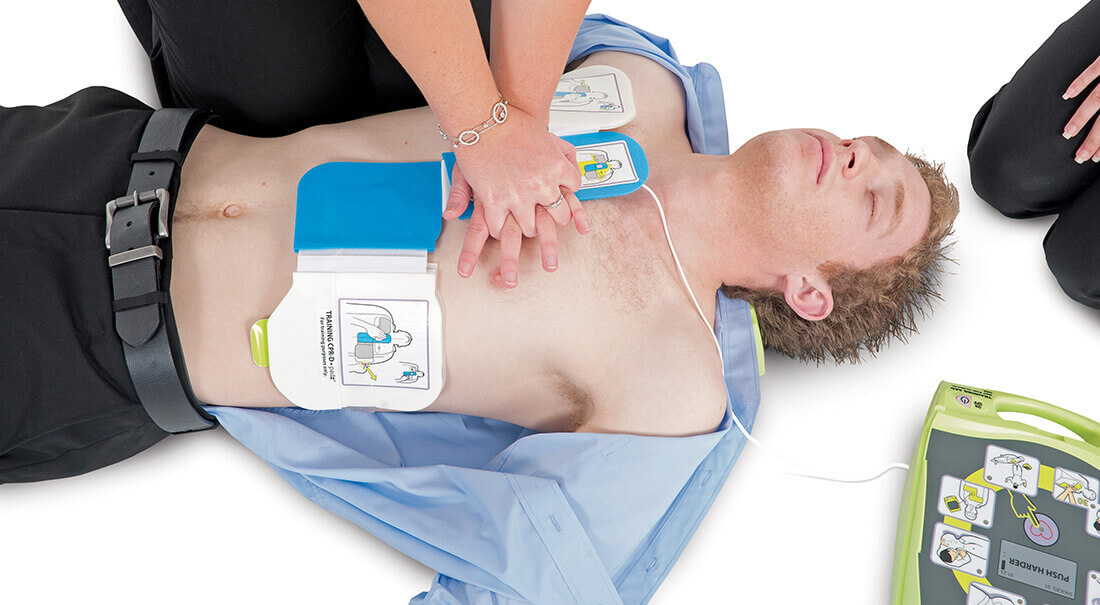
    Nuco Training not only offer dedicated CPR and AED training courses but also the new 4 hour Basic Life Support and Safe use of an AED course.

    A recent UK Government report states …

    It is estimated that around 60,000 out-of-hospital cardiac arrests occur each year in the UK. Overall survival rates vary across England, but range between 2% and 12%. However, survival rates as high as 75% have been reported where CPR and defibrillation are delivered promptly. This is why the statutory guidance on supporting pupils at school with medical conditions advises schools to consider purchasing an AED as part of their first-aid equipment.”

    To see the full document and validation go to www.gov.uk